Tracing Consent Clauses to Progressive Jackpot Triggers Across Regulated Reel Platforms
Frankie Becker · Nov 14, 2026
Tracing Consent Clauses to Progressive Jackpot Triggers Across Regulated Reel Platforms
Regulated reel platforms operate under strict frameworks that tie user consent clauses directly to the activation of progressive jackpot systems, and observers note how these connections shape participation across multiple jurisdictions. Data from industry reports indicate that operators must embed explicit permissions in terms of service before any jackpot pool contributions begin, since progressive mechanics rely on aggregated player stakes that cross game boundaries and platform lines. Research from the European Gaming and Betting Association shows that consent language often specifies data handling for prize calculations, while failure to secure such agreements can halt jackpot eligibility in real time.
Regulatory Foundations in Multiple Markets
Authorities in regions outside the UK enforce these linkages through licensing conditions that demand clear disclosure of how consent enables jackpot triggers. In Malta, the Gaming Authority requires operators to document consent flows that feed into centralized progressive systems, and figures from 2025 audits reveal consistent application of these rules across licensed sites. Canadian provincial regulators similarly mandate that agreements detail the moment a player's stake enters the jackpot pool, creating traceable audit trails that link back to initial user approvals. Those who've examined cross-border operations find that November 2026 marks the rollout of updated technical standards in several EU member states, standards that tighten the mapping between consent records and jackpot event logs.
Operators maintain separate consent modules for standard gameplay versus jackpot participation, and this separation allows platforms to isolate triggers when users withdraw permissions mid-session. Studies from university research groups in Australia highlight cases where incomplete consent clauses led to jackpot disqualifications, forcing operators to recalculate prize distributions after the fact. The reality is that progressive systems process thousands of micro-transactions per minute, so any break in the consent chain disrupts the entire accumulation process.
Technical Integration of Clauses and Triggers
Platform architectures embed consent verification steps immediately before a stake increments the jackpot meter, and this sequencing prevents unauthorized contributions from entering shared pools. Software providers integrate API calls that query consent status at the reel spin level, ensuring that only approved players advance the progressive total. Observers note how these integrations appear in regulated environments where third-party testing labs certify both the consent interface and the jackpot engine as a single compliant unit.
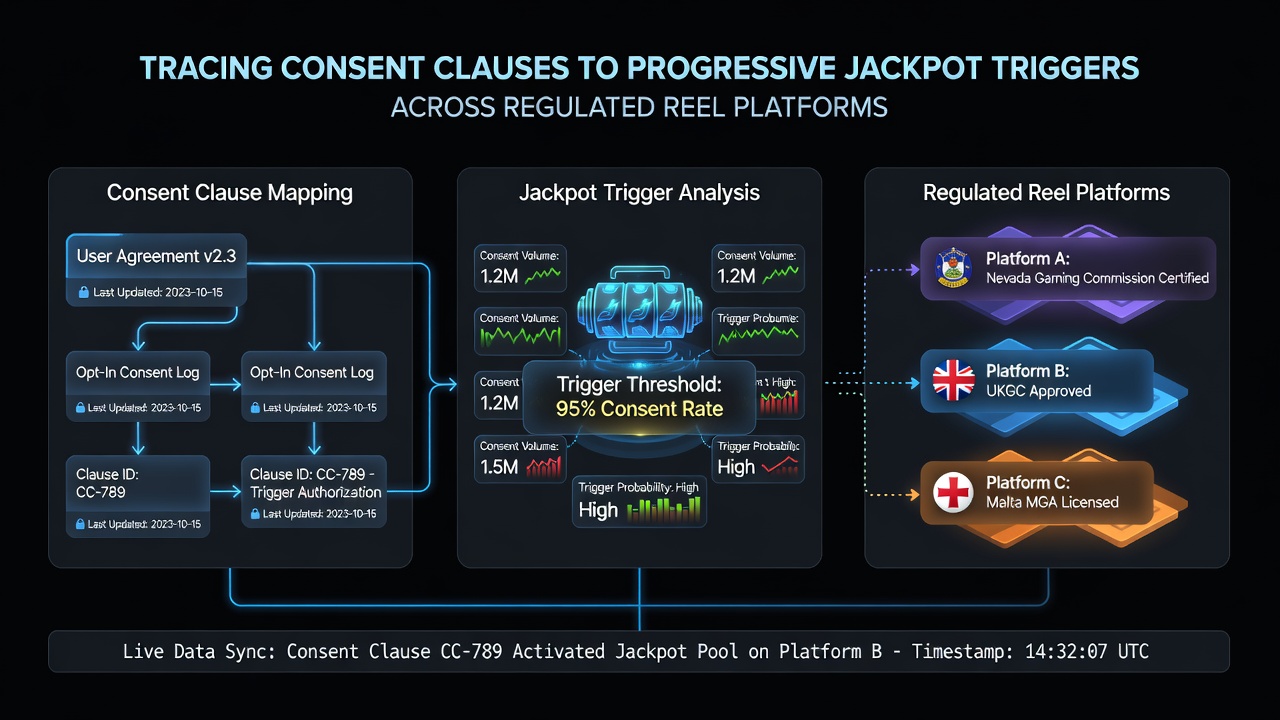
What's interesting is the use of timestamped consent tokens that travel alongside each wager record, and these tokens allow regulators to reconstruct exactly when a player authorized jackpot involvement. In practice, a player who accepts updated terms receives a new token that unlocks future contributions, whereas revocation instantly blocks further meter increases. Data from North American gaming associations indicate that such token systems reduced compliance queries by measurable margins during the 2025 reporting period, while still preserving full traceability for dispute resolution.
Player Agreement Structures and Jackpot Eligibility
Consent clauses typically list specific jackpot-related activities that require separate affirmation, and these lists cover data sharing with pool administrators plus acceptance of random number generator outputs for prize determination. Regulated platforms present these clauses in layered formats so users encounter them at account creation, then again when first accessing a progressive title. Research indicates that platforms using granular consent options experience fewer eligibility disputes because players understand the exact scope of their agreement from the outset.
Case examples from licensed operations show that when consent language references specific jackpot networks, operators can activate or deactivate participation without affecting base game access. This modularity proves useful during regulatory reviews when authorities request proof that only consented stakes contributed to a given prize. By November 2026, several jurisdictions plan to require machine-readable consent logs that feed directly into automated compliance dashboards, and this development will further tighten the connection between clauses and triggers.
Conclusion
Tracing consent clauses to progressive jackpot triggers reveals a tightly coupled system where regulatory compliance depends on precise technical and legal alignment across regulated reel platforms. Evidence from multiple markets demonstrates that operators who maintain clear, auditable links between user permissions and jackpot mechanics meet licensing obligations while supporting uninterrupted prize accumulation. As technical standards evolve into late 2026, the focus remains on verifiable consent flows that underpin every eligible spin and every distributed payout.